Buy cryptoinvesting.eu ?
We are moving the project
cryptoinvesting.eu .
Are you interested in purchasing the domain
cryptoinvesting.eu ?
domain@kv-gmbh.de · 0541-91531010
Buy cryptoinvesting.eu ?
How do you solve compound quantifiers?
Compound quantifiers can be solved by breaking them down into simpler quantifiers and then applying the appropriate rules. For example, if the compound quantifier is "for every x, there exists a y such that...", you can first consider the "for every x" part and then the "there exists a y" part separately. This allows you to apply the rules for universal and existential quantifiers to solve the compound quantifier step by step. By breaking down the compound quantifier into simpler parts and applying the rules systematically, you can effectively solve compound quantifiers. **
How do universal and existential quantifiers describe and negate statements?
Universal quantifiers, denoted by the symbol ∀, are used to make a statement about all elements in a set. For example, the statement "∀x P(x)" means that the predicate P(x) is true for all elements x in the set. To negate a universally quantified statement, we use the symbol ¬ before the quantifier, so the negation of "∀x P(x)" would be "¬∀x P(x)", which is equivalent to "∃x ¬P(x)". On the other hand, existential quantifiers, denoted by the symbol ∃, are used to make a statement about at least one element in a set. For example, the statement "∃x P(x)" means that there exists at least one element x in the set for which the predicate P(x) is true. To negate an existentially quantified statement, we use the symbol ¬ before the quantifier, so the negation of "∃x **
Similar search terms for Quantifiers
Top-Angebote
Products related to Quantifiers:
-
Snug & Styled Portable Waterproof Coin Storage Case For Game Tokens & Collectible Coins redBring order and protection to your valuable coin collection wherever you go. This coin storage case is designed for collectors, gamers, and hobbyists who want a simple way to keep coins, tokens, and game pieces safe from scratches, dust, and...37,97 $*Shipping: 0,00 $Secure redirect to the provider




-
How do you describe and negate universal and existential quantifiers in statements?
Universal quantifiers, denoted by the symbol ∀, are used to make a statement about all elements in a set. For example, the statement "∀x, P(x)" means "For all x, P(x) is true." To negate a universal quantifier, we use the symbol ¬, so the negation of "∀x, P(x)" is "¬(∀x, P(x))," which can be rewritten as "∃x, ¬P(x)," meaning "There exists an x such that P(x) is false." Existential quantifiers, denoted by the symbol ∃, are used to make a statement about the existence of at least one element in a set. For example, the statement "∃x, P(x)" means "There exists an x such that P(x) is true." To negate an existential quantifier, we use the symbol ¬, so the negation of "∃x, P(x)" is **
-
How can I express the following statement using quantifiers or mathematical symbols?
The statement "All cats are mammals" can be expressed using quantifiers and mathematical symbols as ∀x (Cat(x) → Mammal(x)), where ∀x denotes "for all x", Cat(x) represents "x is a cat", Mammal(x) represents "x is a mammal", and the arrow → denotes "implies". This statement asserts that for every x, if x is a cat, then x is a mammal. **
-
What are the rules for negating mathematical statements using quantifiers and sets?
When negating a mathematical statement with quantifiers and sets, the following rules apply: 1. To negate a statement with a universal quantifier (∀), change it to an existential quantifier (∃) and vice versa. 2. When negating a statement involving sets, use the complement of the set to negate the original statement. 3. When negating a statement involving a logical connective (such as AND, OR), apply De Morgan's laws to distribute the negation over the connectives. **
-
How can one exchange or sell ERC20 tokens?
ERC20 tokens can be exchanged or sold on various cryptocurrency exchanges that support these tokens. One can create an account on a reputable exchange, deposit their ERC20 tokens, and then place sell orders on the exchange platform. Alternatively, decentralized exchanges (DEXs) can also be used to trade ERC20 tokens directly from one's wallet without the need to deposit funds on an exchange. It is important to research and choose a secure and reliable platform for exchanging or selling ERC20 tokens. **


How dangerous is the digital identity wallet?
The digital identity wallet can be dangerous if not properly secured. If it falls into the wrong hands, it can lead to identity theft, financial fraud, and other forms of cybercrime. However, with proper security measures such as strong passwords, two-factor authentication, and encryption, the digital identity wallet can be a secure and convenient way to manage and protect personal information. It is important for users to be vigilant and take necessary precautions to protect their digital identity wallet from potential threats. **
How is a blockchain structured?
A blockchain is structured as a decentralized, distributed ledger that records transactions across a network of computers. Each block in the chain contains a list of transactions, a timestamp, and a reference to the previous block, creating a chronological and immutable record of all transactions. The network of computers, or nodes, work together to validate and add new blocks to the chain through a consensus mechanism, such as proof of work or proof of stake. This structure ensures that the blockchain is secure, transparent, and resistant to tampering or fraud. **
Top-Angebote
Products related to Quantifiers:
-
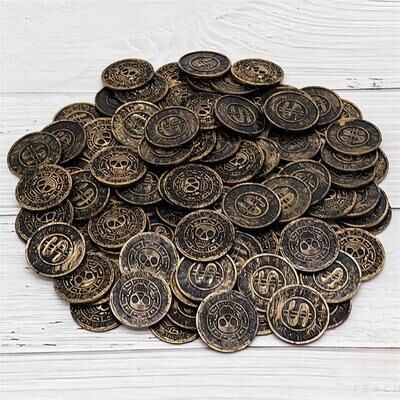
Uplift Essentials 10Pcs Retro Pirate Coins Plastic Treasure Tokens For Parties & Halloween 10Pcs Retro Pirate Coins Plastic Treasure Tokens For Parties & HalloweenFuel exciting treasure hunts, piratethemed birthday games, and Halloween rewards with this 10piece retro pirate coin set. Designed with raised vintage embossing, including classic skullandcrossbones motifs and decorative treasury symbols, these...32,97 $*Shipping: 0,00 $Secure redirect to the provider
-
Snug & Styled Portable Waterproof Coin Storage Case For Game Tokens & Collectible Coins redBring order and protection to your valuable coin collection wherever you go. This coin storage case is designed for collectors, gamers, and hobbyists who want a simple way to keep coins, tokens, and game pieces safe from scratches, dust, and...37,97 $*Shipping: 0,00 $Secure redirect to the provider
-
How do you solve compound quantifiers?
Compound quantifiers can be solved by breaking them down into simpler quantifiers and then applying the appropriate rules. For example, if the compound quantifier is "for every x, there exists a y such that...", you can first consider the "for every x" part and then the "there exists a y" part separately. This allows you to apply the rules for universal and existential quantifiers to solve the compound quantifier step by step. By breaking down the compound quantifier into simpler parts and applying the rules systematically, you can effectively solve compound quantifiers. **
-
How do universal and existential quantifiers describe and negate statements?
Universal quantifiers, denoted by the symbol ∀, are used to make a statement about all elements in a set. For example, the statement "∀x P(x)" means that the predicate P(x) is true for all elements x in the set. To negate a universally quantified statement, we use the symbol ¬ before the quantifier, so the negation of "∀x P(x)" would be "¬∀x P(x)", which is equivalent to "∃x ¬P(x)". On the other hand, existential quantifiers, denoted by the symbol ∃, are used to make a statement about at least one element in a set. For example, the statement "∃x P(x)" means that there exists at least one element x in the set for which the predicate P(x) is true. To negate an existentially quantified statement, we use the symbol ¬ before the quantifier, so the negation of "∃x **
-
How do you describe and negate universal and existential quantifiers in statements?
Universal quantifiers, denoted by the symbol ∀, are used to make a statement about all elements in a set. For example, the statement "∀x, P(x)" means "For all x, P(x) is true." To negate a universal quantifier, we use the symbol ¬, so the negation of "∀x, P(x)" is "¬(∀x, P(x))," which can be rewritten as "∃x, ¬P(x)," meaning "There exists an x such that P(x) is false." Existential quantifiers, denoted by the symbol ∃, are used to make a statement about the existence of at least one element in a set. For example, the statement "∃x, P(x)" means "There exists an x such that P(x) is true." To negate an existential quantifier, we use the symbol ¬, so the negation of "∃x, P(x)" is **
-
How can I express the following statement using quantifiers or mathematical symbols?
The statement "All cats are mammals" can be expressed using quantifiers and mathematical symbols as ∀x (Cat(x) → Mammal(x)), where ∀x denotes "for all x", Cat(x) represents "x is a cat", Mammal(x) represents "x is a mammal", and the arrow → denotes "implies". This statement asserts that for every x, if x is a cat, then x is a mammal. **
Similar search terms for Quantifiers
-
York Wallcoverings Exchange Crystal Shore WallpaperExchange's small, unique, fractured lines feel like an artisanal installation rendered in burnished metallic against a textural plaster ground, shown in taupe grey with burnished metallic..170,00 $*Shipping: 0,00 $Secure redirect to the provider
-
What are the rules for negating mathematical statements using quantifiers and sets?
When negating a mathematical statement with quantifiers and sets, the following rules apply: 1. To negate a statement with a universal quantifier (∀), change it to an existential quantifier (∃) and vice versa. 2. When negating a statement involving sets, use the complement of the set to negate the original statement. 3. When negating a statement involving a logical connective (such as AND, OR), apply De Morgan's laws to distribute the negation over the connectives. **
-
How can one exchange or sell ERC20 tokens?
ERC20 tokens can be exchanged or sold on various cryptocurrency exchanges that support these tokens. One can create an account on a reputable exchange, deposit their ERC20 tokens, and then place sell orders on the exchange platform. Alternatively, decentralized exchanges (DEXs) can also be used to trade ERC20 tokens directly from one's wallet without the need to deposit funds on an exchange. It is important to research and choose a secure and reliable platform for exchanging or selling ERC20 tokens. **
-
How dangerous is the digital identity wallet?
The digital identity wallet can be dangerous if not properly secured. If it falls into the wrong hands, it can lead to identity theft, financial fraud, and other forms of cybercrime. However, with proper security measures such as strong passwords, two-factor authentication, and encryption, the digital identity wallet can be a secure and convenient way to manage and protect personal information. It is important for users to be vigilant and take necessary precautions to protect their digital identity wallet from potential threats. **
-
How is a blockchain structured?
A blockchain is structured as a decentralized, distributed ledger that records transactions across a network of computers. Each block in the chain contains a list of transactions, a timestamp, and a reference to the previous block, creating a chronological and immutable record of all transactions. The network of computers, or nodes, work together to validate and add new blocks to the chain through a consensus mechanism, such as proof of work or proof of stake. This structure ensures that the blockchain is secure, transparent, and resistant to tampering or fraud. **
* All prices are inclusive of VAT and, if applicable, plus shipping costs. The offer information is based on the details provided by the respective shop and is updated through automated processes. Real-time updates do not occur, so deviations can occur in individual cases. ** Note: Parts of this content were created by AI.